
Slow internet is one of the most frustrating computer problems you can experience. Your video calls freeze at critical moments, downloads crawl along at a snail’s pace, and streaming buffers endlessly, yet your internet plan promises lightning-fast speeds.
You’ve restarted your router multiple times, checked with your ISP, and even upgraded your service plan, but the problems persist. The culprit might not be your internet connection at all; it could be your computer’s network card failing.
Network card problems are notoriously difficult to diagnose because their symptoms overlap with router issues, ISP service problems, and even software conflicts.
Unlike a dead hard drive or a visually obvious graphics card failure, a failing network adapter creates intermittent, seemingly random connectivity issues that can leave you chasing ghosts for weeks.
Understanding how to properly identify network card problems can save you from unnecessary router replacements, costly ISP service calls, and hours of unproductive troubleshooting.
This article will teach you how to definitively determine whether your network card is causing your connectivity issues or if the problem lies elsewhere in your network infrastructure.
Early diagnosis is crucial because a failing network adapter doesn’t just slow your connection; it can cause data loss during file transfers, corrupt downloads, and disrupt critical work communications when you can least afford it.
Understanding Your Network Hardware
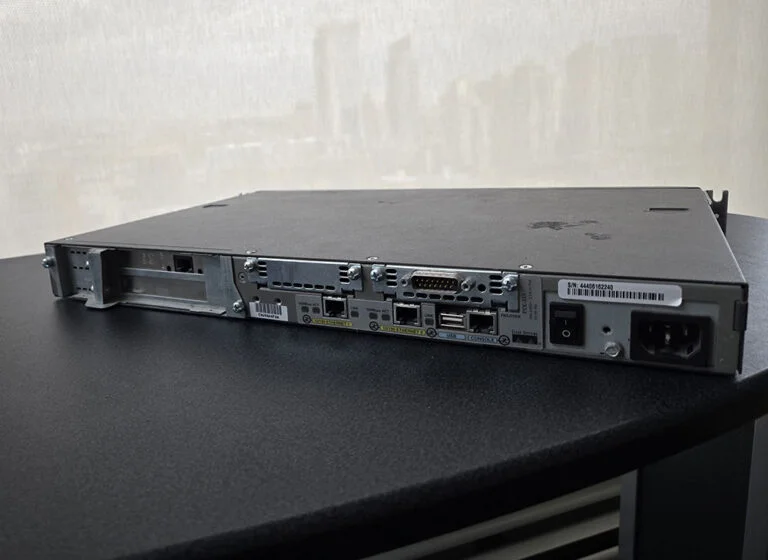
Before diving into diagnostic techniques, you need to understand what a network card actually does and how different types of network adapters can fail in distinct ways.
What is a Network Card?
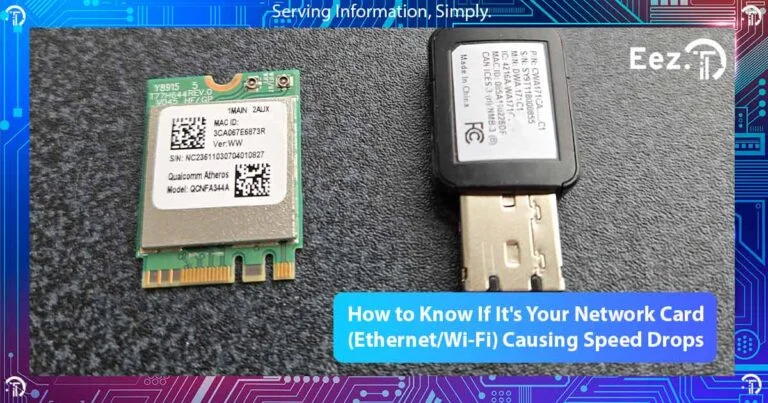
A network interface card (NIC), commonly called a network card or network adapter, is the hardware component that enables your computer to communicate with networks and the internet. Think of it as your computer’s translator, converting data from your system into signals that can travel across network cables or through the air as wireless signals, then translating incoming network signals back into data your computer can understand.
Modern computers typically come with built-in network adapters integrated directly into the motherboard. These integrated adapters handle both Ethernet (wired) and WiFi (wireless) connections, though they’re technically separate components that can fail independently.
Desktop users can also add dedicated PCIe network cards for improved performance or additional connectivity options, while USB network adapters offer portable solutions for both laptops and desktops.
Ethernet vs. WiFi Adapters
Understanding the differences between wired and wireless network connections helps identify which type of adapter might be causing your problems.
Ethernet adapters provide wired connections using network cables, offering the most reliable and consistent network performance. They’re less susceptible to interference, deliver lower latency, and typically provide the full speed of your internet connection without degradation.
When Ethernet adapters fail, they usually show clear symptoms like complete connection loss or dramatically reduced speeds that are easy to identify.
WiFi adapters handle wireless connections and are inherently more complex than their Ethernet counterparts. They must deal with signal interference, distance limitations, and competing wireless devices, which means WiFi problems can be caused by environmental factors as easily as hardware failure.
WiFi adapter failures often present as intermittent connection drops, reduced signal strength, or the inability to maintain stable connections, symptoms that can easily be mistaken for router problems or wireless interference.
The key diagnostic advantage of systems with both adapter types is that you can test each independently. If WiFi connections fail but Ethernet works perfectly, you’ve isolated the problem to the wireless adapter.
Conversely, if both connection types experience identical issues, the problem likely lies with your router, ISP, or software rather than the network hardware itself.
Signs & Symptoms of Network Card Problems
Identifying network card-specific symptoms requires distinguishing between problems that affect only your computer and issues that impact your entire network.
The hallmark of network card failure is that connectivity problems follow your computer to different networks, while other devices on your home network perform normally.
Intermittent Connection Drops
One of the most common signs of a failing network card is intermittent connection drops that occur seemingly at random. Your network icon shows connected one moment, then displays “no internet access” the next, only to reconnect spontaneously seconds or minutes later.
These drops feel random because they often are. Failing network card components behave unpredictably as they deteriorate.
What distinguishes network card connection drops from router or ISP issues is their isolation to a single device. When your network adapter is failing, your laptop loses connectivity while your phone, tablet, and other computers maintain perfect connections to the same network.
You’ll notice websites timing out mid-load, video calls dropping unexpectedly, and online games disconnecting without warning, but only on the problematic computer.
The key diagnostic indicator is whether these connection drops happen across multiple networks. If your computer experiences the same intermittent disconnections at home, at work, at coffee shops, and on your mobile hotspot, the problem clearly travels with your device, pointing directly to the network card rather than any specific network or router.
Consistently Slow Speeds on One Device
Perhaps the clearest indicator of network card problems is when one computer experiences dramatically slower speeds than other devices on the same network.
You run a speed test on your laptop and get 10 Mbps, while your phone test from the same location shows 200 Mbps, the full speed of your internet plan.
This speed disparity reveals that your network infrastructure is functioning properly and delivering promised speeds to devices with healthy network adapters.
The bottleneck exists specifically within the problematic computer’s network hardware or drivers. Document these speed differences by testing multiple devices simultaneously and recording the results for comparison.
Network card hardware degradation often manifests as progressively slower speeds over time.
Your adapter might have once delivered full gigabit speeds through Ethernet, but now maxes out at 100 Mbps or less. Similarly, your WiFi connection that used to achieve 300 Mbps might now struggle to exceed 50 Mbps, even when positioned right next to the router.
This gradual performance decline indicates deteriorating network card components rather than sudden configuration changes.
WiFi Connected But No Internet Access
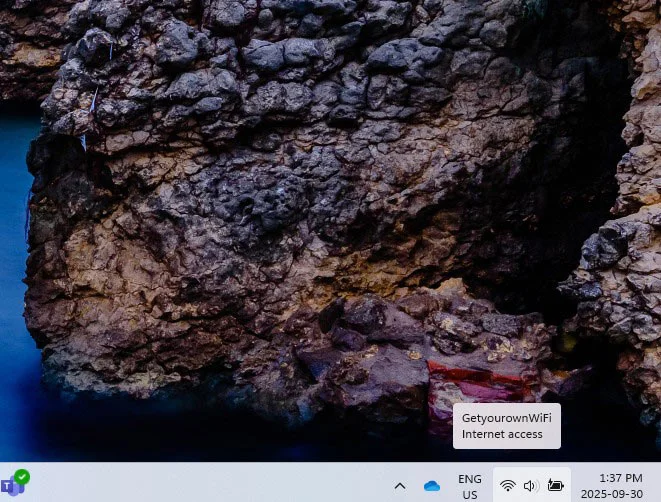
A particularly frustrating symptom of network adapter problems is showing a solid connection to your WiFi network while having no actual internet access.
Your computer reports “Connected, no internet” or displays a yellow exclamation mark over the network icon, yet other devices browse the web effortlessly on the same network.
This symptom occurs when the network adapter can establish a connection to the router but fails to properly communicate with the internet beyond.
The failure might involve corrupted network drivers struggling to handle internet protocol communications, or hardware problems preventing the adapter from processing certain types of network traffic correctly.
Driver-related causes of this symptom can often be resolved through reinstallation, while persistent “no internet” messages despite multiple driver updates and network resets typically indicate hardware failure.
The pattern of occurrence matters too—if the problem happens randomly and temporarily resolves after system restarts, hardware failure becomes increasingly likely.
Ethernet Works But WiFi Doesn’t (or Vice Versa)
When one connection type functions perfectly while the other fails completely, you’ve struck diagnostic gold.
This scenario definitively isolates the problem to a specific adapter, eliminating confusion about whether routers, ISPs, or software might be responsible.
A laptop that connects flawlessly via Ethernet cable but refuses to find any WiFi networks indicates a failed wireless adapter. The working Ethernet connection proves your internet service, router, and network drivers are functioning properly; only the WiFi hardware is compromised.
Conversely, if WiFi works fine but Ethernet connections fail to establish or negotiate proper speeds, the wired network port or adapter has failed.
Desktop computers with separate Ethernet and WiFi adapters can experience this failure mode when one adapter ages faster than the other or sustains physical damage.
Laptops with dual connectivity might show this symptom when the WiFi antenna becomes disconnected inside the case or when the Ethernet port sustains physical damage from repeated cable insertions.
Speed Degradation Over Time
Gradual network performance decline is easier to miss than sudden failures, but it’s an equally important symptom of approaching network card failure.
You might not notice that downloads taking five minutes used to take thirty seconds, or that video calls now buffer regularly when they were once crystal clear.
The best way to identify this pattern is by documenting network speeds over weeks or months.
Run regular speed tests and note the results, watching for gradual downward trends that can’t be explained by ISP service changes or increased network congestion. Performance that degrades steadily regardless of network conditions points to deteriorating network adapter hardware.
Temperature-related performance degradation provides additional diagnostic clues.
If your network speeds are acceptable when your computer first boots but decline progressively as the system heats up during use, overheating network card components are likely failing.
This pattern strongly suggests hardware problems rather than software or network issues, as temperature significantly affects computer performance across all components.
Network Adapter Not Recognized in Device Manager
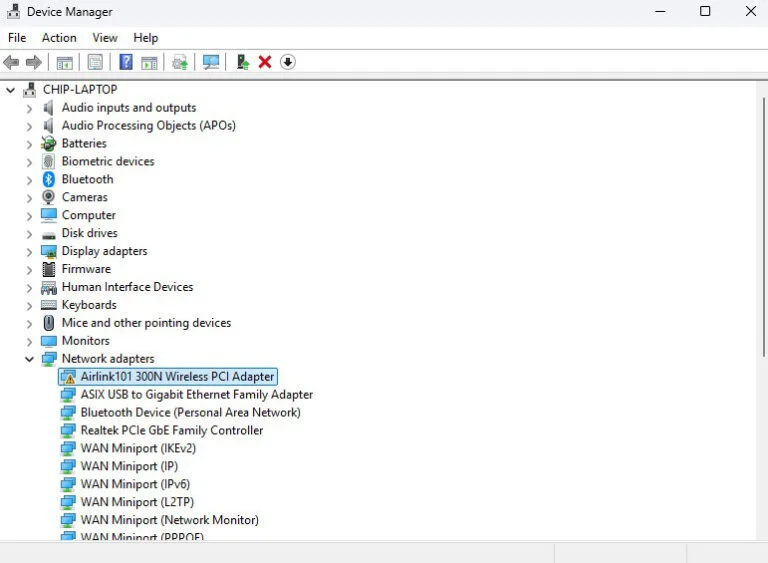
When Windows can’t detect or properly recognize your network adapter, you’re likely dealing with either driver corruption or complete hardware failure.
Opening Device Manager and finding your network adapter listed with a yellow triangle warning, marked as “Unknown device,” or missing entirely indicates serious problems.
Driver corruption can cause recognition failures, but these typically resolve after clean driver reinstallation.
If your network adapter repeatedly disappears from Device Manager, reappears after restarts, or shows persistent error codes despite multiple driver installations, the hardware itself has likely failed. This intermittent recognition pattern often precedes complete adapter failure by days or weeks.
Pay attention to error codes displayed in Device Manager’s device properties.
Error Code 10 (device cannot start) often indicates driver issues, while Error Code 43 (device has stopped working) frequently points to hardware failure.
Error Code 52 (Windows cannot verify the digital signature) suggests driver installation problems rather than hardware issues.
Understanding these codes helps distinguish between software problems you can fix and hardware failures requiring replacement.
Common Causes of Network Card Failure
Understanding why network cards fail helps with both accurate diagnosis and preventing future problems.
Unlike hard drives that wear out from mechanical use or storage devices that fail from age, network cards typically fail due to electrical stress, heat damage, or physical trauma.
Driver Corruption and Compatibility Issues
Before assuming hardware failure, consider driver problems as the most likely culprit behind network adapter issues. Driver corruption happens surprisingly often and mimics hardware failure symptoms perfectly, but it’s far easier and cheaper to fix.
Windows updates frequently trigger network driver conflicts, particularly when the operating system automatically installs generic network drivers that don’t work optimally with your specific hardware.
Software conflicts between network utilities, VPN clients, and system updates can corrupt driver files, causing connectivity problems that appear hardware-related but resolve completely with clean driver reinstallation.
The good news about driver issues is their relative ease of diagnosis and repair.
If network problems resolve temporarily after driver reinstallation but return days or weeks later, you’re likely dealing with software conflicts or incompatibility rather than hardware failure.
However, if multiple clean driver installations from the manufacturer’s website fail to resolve connectivity problems, hardware failure becomes the more likely explanation.
Physical Damage and Port Wear
Physical damage to network ports and adapters is particularly common with Ethernet connections on laptops.
The plastic retention clips that secure Ethernet cables break easily, bent pins inside the Ethernet port prevent proper connection, and repeated cable insertion gradually wears out the port’s electrical contacts. Once physical damage occurs, the Ethernet port may work intermittently or fail completely regardless of driver status.
WiFi adapters in laptops face their own physical vulnerabilities. The wireless antenna typically routes through the laptop’s display hinge, and repeated opening and closing can gradually disconnect or damage the antenna cables.
A laptop with weakening WiFi signal strength, despite working perfectly when new, might simply have antenna cables that have worked loose from years of normal use.
USB network adapters combine the worst of both worlds. They’re vulnerable to physical stress from the USB connection point and can be damaged by impacts, drops, or simply leaving them plugged in while moving the laptop around.
A USB WiFi adapter that becomes increasingly unreliable or requires reseating to maintain connectivity has likely sustained physical damage that will worsen over time.
Overheating and Thermal Issues
Network cards generate heat during operation, and inadequate cooling can cause them to fail prematurely.
Built-in network adapters share the motherboard’s cooling system, meaning poor case ventilation or dust-clogged vents can cause network hardware to overheat along with other components.
Overheating manifests as network performance that degrades after extended use, then improves after the system cools down. You might notice that network speeds are excellent when you first start working, but gradually decline over hours of continuous use.
Connection stability might worsen during demanding tasks that generate system heat, then improve when the computer idles and cools.
PCIe network cards in desktop computers are particularly vulnerable to overheating in poorly ventilated cases.
High-performance network adapters with their own heatsinks can cook themselves in restrictive case layouts or when surrounded by heat-generating components like graphics cards and power supplies.
Regular system cleaning and attention to how temperature affects computer performance can prevent thermal damage to network hardware.
Power Supply and Electrical Issues
Network cards require clean, stable power to function properly, and power delivery problems can cause symptoms identical to hardware failure.
Insufficient power to PCIe slots prevents expansion network cards from operating reliably, while voltage fluctuations from aging power supplies can cause intermittent network adapter failures.
Systems with marginal power supplies often show network problems that coincide with high system load.
Your network connection might drop or slow dramatically when launching games, rendering video, or running multiple demanding applications simultaneously, which are scenarios that strain the power supply’s capacity.
If network stability improves when you reduce system load or shut down power-hungry components, power delivery issues deserve investigation.
Electrical surges from power outages, lightning strikes, or simply poor building electrical systems can permanently damage network cards.
Unlike gradual failures that develop over months, surge-induced damage typically presents as sudden, complete network adapter failure. One moment everything works fine, the next moment the adapter is completely non-functional.
This failure pattern suggests checking your power supply health as part of comprehensive diagnostics.
Age and Component Wear
Like all electronic components, network cards have finite lifespans determined by component quality, usage intensity, and environmental factors.
Typical network adapters last between 5-10 years under normal conditions, though this varies significantly based on usage patterns and manufacturing quality.
Consumer-grade network hardware in laptops tends to fail sooner than enterprise-grade components in business desktops, partly due to quality differences and partly due to the harsh treatment laptops endure.
Portable computers experience thermal stress from variable operating environments, physical stress from movement and vibration, and electrical stress from inconsistent power delivery, all of which accelerate component aging.
When evaluating whether it’s time to replace your computer entirely versus just replacing the network adapter, consider the system’s age holistically. A 7-year-old laptop with a failing network adapter likely has other components approaching end-of-life, too.
Investing in network card replacement makes sense for relatively new systems, but older computers might warrant complete replacement instead.
Step-by-Step Diagnostic Process
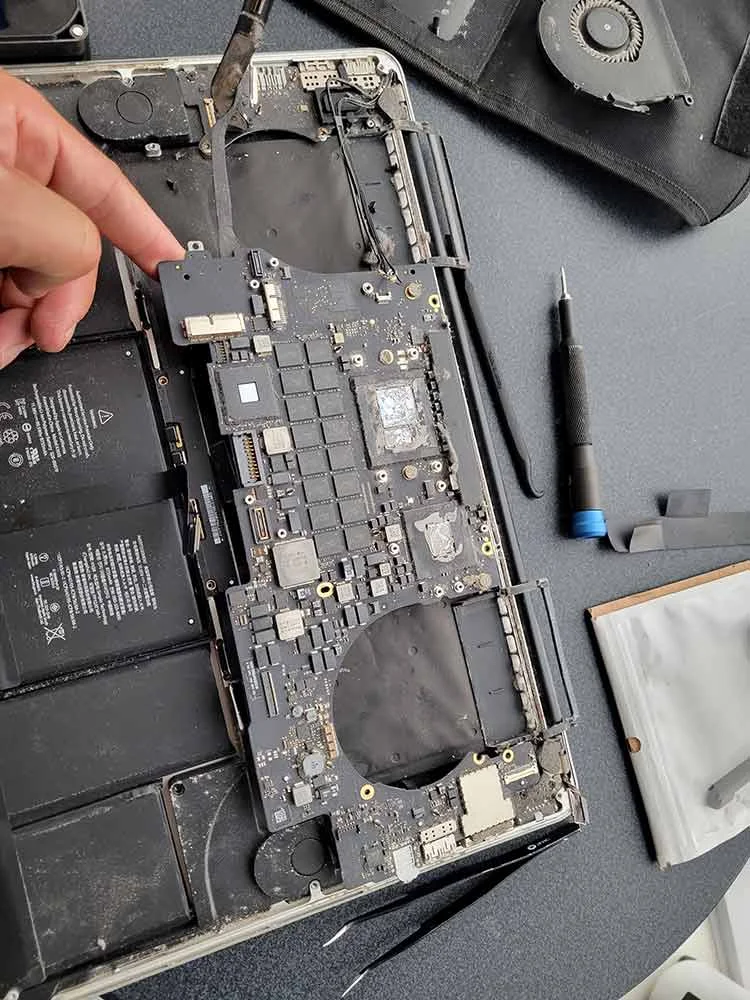
Systematic diagnosis eliminates guesswork and prevents wasting time on ineffective solutions. Follow these steps in order, documenting your findings to build a clear picture of whether your network card has failed or if the problem lies elsewhere.
Initial Speed Testing and Documentation
Begin diagnosis by establishing baseline network performance and comparing it across devices. Visit Speedtest.net or Fast.com and run tests from multiple devices on your network, recording results for each device.
Test your problem computer, then immediately test another device from the same physical location to eliminate WiFi signal strength variables.
Run tests multiple times throughout the day to account for ISP service fluctuations and network congestion. Morning tests might show different results than evening tests when neighbourhood internet usage peaks.
Document whether speed differences between devices remain consistent regardless of time of day, as consistent speed disparities point to hardware problems rather than network congestion.
Compare connection types systematically by testing both WiFi and Ethernet on your problem computer, if possible.
If WiFi delivers 50 Mbps but Ethernet delivers 500 Mbps on the same computer, you’ve isolated the issue to the wireless adapter.
Conversely, if both connection types show identical slow speeds while other devices achieve full speeds, start investigating system-wide issues like software conflicts or CPU and RAM performance bottlenecks before assuming network card failure.
Checking Network Adapter Status in Windows
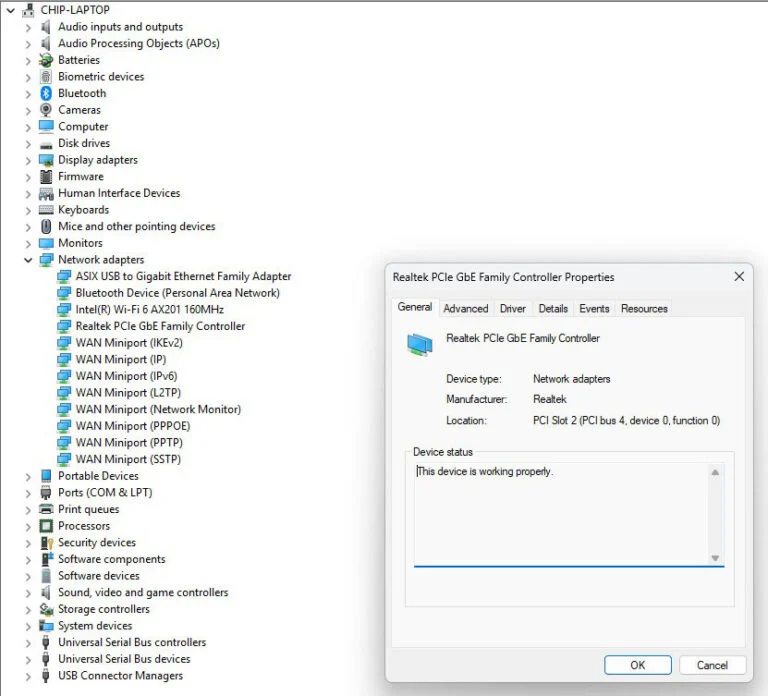
Device Manager provides crucial diagnostic information about network adapter health and driver status.
Open Device Manager by pressing Windows key + X and selecting Device Manager from the menu, or type “devmgmt.msc” in the Windows search box and press Enter.
Expand the “Network adapters” section to view all network devices installed on your system.
Healthy adapters appear with normal icons and descriptive names like “Intel Wi-Fi 6 AX200” or “Realtek PCIe GbE Family Controller.”
Warning signs include yellow triangle icons indicating driver problems, red X marks showing disabled devices, or generic names like “Unknown device” suggesting recognition failures.
Right-click your network adapter and select Properties to view detailed status information.
The “general” tab field displays whether the device is working properly or shows specific error codes.
Check the Driver tab to see driver version, date, and manufacturer.
Outdated drivers from years ago suggest the adapter hasn’t received proper maintenance, while very recent driver dates following connectivity problems might indicate a problematic update.
Testing Network Adapter Performance
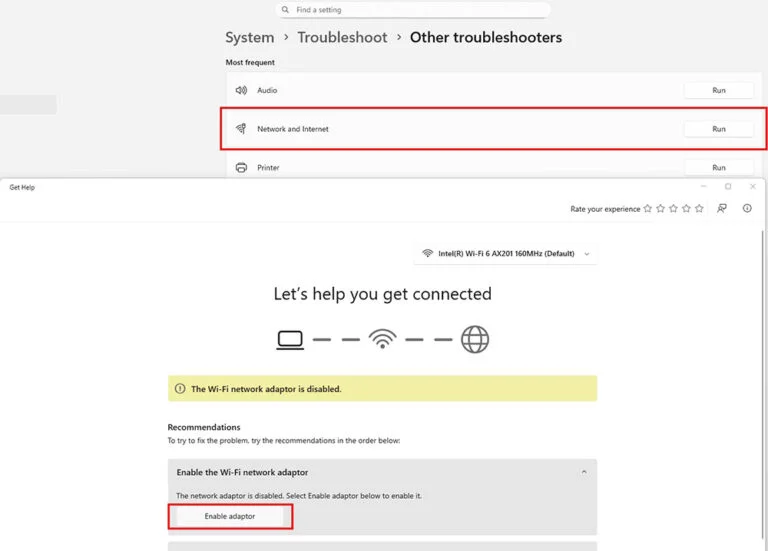
Windows includes built-in troubleshooting tools that can identify common network problems automatically.
Navigate to Settings > Update & Security > Troubleshoot > Additional troubleshooters > Internet Connections and run the network troubleshooter.
While these automated tools rarely fix serious hardware problems, they can identify configuration issues and provide useful diagnostic information in the process.
Monitor real-time network performance using Task Manager’s Performance tab.
Press Ctrl + Shift + Esc to open Task Manager, click the Performance tab, and select your network adapter from the left sidebar.
Watch network utilization, link speed, and throughput while browsing, downloading, or streaming. A gigabit Ethernet adapter should show link speed of 1 Gbps, while slower speeds indicate negotiation problems or failing hardware.
Built-in monitoring tools like “ping” can reveal packet loss and network errors that indicate hardware problems.
High packet loss percentages during simple network operations suggest the adapter is failing to transmit or receive data reliably.
Consistent latency spikes and irregular ping times to local network devices (not internet destinations) point to adapter problems rather than ISP issues.
Test network adapter isolation by connecting directly to your modem via Ethernet, bypassing your router entirely.
If direct modem connection delivers full speeds while router connection doesn’t, you’ve identified a router problem rather than network card failure.
Conversely, if direct modem connection still shows slow speeds or instability, the problem lies with your computer’s network hardware or drivers.
Driver Troubleshooting Steps
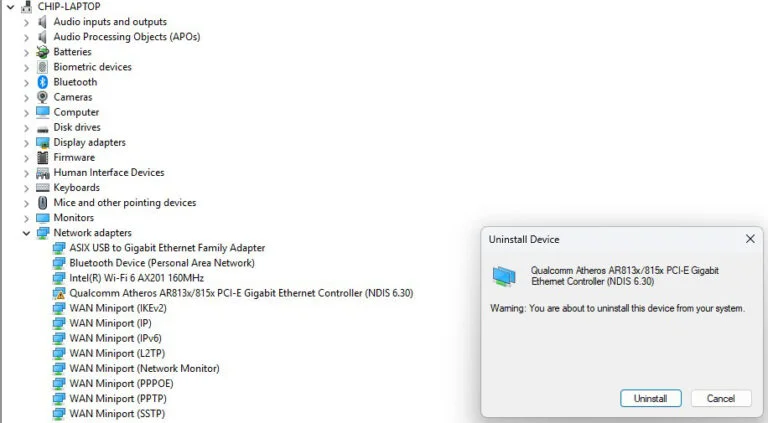
Driver problems cause the majority of network connectivity issues, making thorough driver troubleshooting essential before assuming hardware failure.
Begin by identifying your exact network adapter model from Device Manager, then visit the manufacturer’s website directly, Intel, Realtek, Qualcomm, or your computer manufacturer for integrated adapters.
Download the latest driver package for your specific adapter model and Windows version.
Avoid generic driver update utilities or third-party driver download sites, as these often install incorrect or outdated drivers that cause more problems than they solve. Manufacturer websites provide drivers specifically tested and certified for your hardware.
Perform a clean driver installation by first uninstalling the existing driver completely.
Right-click the network adapter in Device Manager, select Uninstall device, and check the box to “Delete the driver software for this device” if available.
Restart your computer, then install the freshly downloaded driver. This process ensures no corrupted files from the old installation interfere with the new driver.
If recent driver updates coincided with your connectivity problems, roll back to the previous driver version.
In Device Manager, right-click your network adapter, select Properties, click the Driver tab, and choose “Roll Back Driver” if available.
This option appears only if Windows has retained previous driver files, which it doesn’t always do. Rolling back can restore functionality when new drivers introduce bugs or compatibility issues.
For persistent driver problems that resist normal troubleshooting, use Snappy Driver Installer Origin to completely purge all driver traces.
These specialized tools remove registry entries, cached files, and system configurations that normal uninstallation leaves behind, providing the cleanest possible slate for fresh driver installation.
Hardware Inspection and Testing
Physical inspection reveals problems that software diagnostics miss entirely.
With your computer powered off and unplugged, examine Ethernet ports for broken retention clips, bent pins, or debris lodged inside the port. Shine a flashlight into the port, the eight gold pins should be straight, evenly spaced, and free from corrosion or damage.
USB network adapters should be inspected for loose connections, cracked housings, or damaged USB connectors.
Try the adapter in different USB ports to eliminate port-specific problems.
USB 3.0 ports (typically blue) provide significantly better performance than USB 2.0 ports (black) for high-speed network adapters, so ensure you’re using an appropriate port for testing.
Desktop users with PCIe network cards should power down, disconnect from power, and open their case to inspect the card’s seating.
Remove the network card completely, examine the PCIe connector for dust or debris, clean if necessary using compressed air, and reseat the card firmly in the slot. Ensure any power connectors are fully seated if the card requires supplemental power.
Alternative adapter testing provides definitive diagnosis by introducing a known-good component.
Purchase an inexpensive USB WiFi or Ethernet adapter and test whether it resolves your connectivity issues.
If the USB adapter delivers perfect connectivity while your integrated adapter fails, you’ve confirmed hardware failure of the built-in adapter. This $20-$30 test can save hours of unproductive troubleshooting and provides a temporary solution while planning permanent repairs.
Test your problematic computer on completely different networks to determine whether issues follow your device.
Visit a friend’s house, connect to public WiFi at a library or coffee shop, or use your phone’s mobile hotspot.
If connectivity problems persist across all networks while other devices work fine on those same networks, your network card is definitively at fault.
Conversely, if your computer works perfectly on some networks but not others, investigate router compatibility or network configuration issues rather than hardware failure.
Distinguishing Network Card Issues from Other Problems
Accurate diagnosis requires differentiating between network card failures and the many other issues that cause identical symptoms. Each comparison helps you eliminate possibilities until only the true cause remains.
Network Card vs. Router Problems
Router problems affect all connected devices simultaneously, while network card problems affect only the specific computer with the failing adapter.
When your laptop experiences slow speeds or connection drops but your smartphone, tablet, and other computers maintain perfect connectivity on the same network, the laptop’s network card deserves suspicion rather than the router.
Router-related issues often show time-based patterns that network card failures don’t. If all devices slow down during evening peak usage hours then return to normal speeds late at night, you’re experiencing either ISP congestion or router overload, not network card failure.
Router problems frequently improve after rebooting the router, while network card failures persist regardless of router restarts.
Signal strength patterns help differentiate WiFi router problems from adapter issues.
If your computer shows weak WiFi signal strength everywhere in your home while other devices show strong signals in the same locations, your adapter’s receive sensitivity has degraded.
Conversely, if all devices show weak signals far from the router but strong signals nearby, the router’s transmit power or antenna placement needs addressing.
Test multiple networks to definitively separate router from network card issues.
If your computer experiences identical connectivity problems at home, at work, at coffee shops, and on mobile hotspots, the problem clearly travels with your device rather than being caused by any specific router or network infrastructure.
Network Card vs. ISP Service Issues
ISP service problems affect your entire network infrastructure, causing all devices to experience identical issues simultaneously.
Check ISP status pages, social media, or ask neighbours whether they’re experiencing similar problems. Widespread issues indicate ISP service problems rather than your network card.
Direct modem testing eliminates ISP variables from diagnosis. Connect your computer directly to the modem via Ethernet cable, bypassing your router entirely.
Run speed tests and evaluate connection stability. If direct modem connection delivers full promised speeds while router connection doesn’t, you’ve identified a router or WiFi issue rather than network card or ISP problems.
However, if direct modem connection still shows slow speeds or instability isolated to your computer while other devices perform well when connected to the router, your network card remains the prime suspect.
ISP speed delivery to the modem versus speed delivery to your computer provides crucial diagnostic data. Most modems include status pages accessible via web browser that show the connection speed between the modem and ISP.
If this speed matches your service plan but your computer receives dramatically lower speeds, the bottleneck exists between the modem and your computer, implicating router, network card, or driver problems rather than ISP service issues.
Network Card vs. Software/Virus Issues
Malware and background software can consume bandwidth and cause connectivity issues that mimic network card failure.
Open Task Manager and monitor network usage while experiencing speed problems. If you see unfamiliar processes consuming significant bandwidth, investigate those processes before assuming hardware failure.
High CPU usage often accompanies software-based network problems.
When viruses, crypto mining malware, or misbehaving applications consume excessive CPU resources, your entire system slows down including network performance.
Check CPU usage in Task Manager. Sustained high usage without known demanding applications suggests software problems rather than network card failure.
Safe Mode with Networking provides a diagnostic environment that eliminates third-party software variables.
Restart Windows in Safe Mode with Networking and test network performance. If connectivity problems disappear in Safe Mode but return in normal mode, software conflicts rather than hardware failure are causing your issues. Systematically disable startup programs and services to identify the conflicting software.
Fresh Windows installations offer the ultimate software-based diagnostic test.
If you’ve exhausted other troubleshooting and remain uncertain whether software or hardware causes your connectivity problems, back up important data and perform a clean Windows installation.
If network problems persist immediately after a clean installation with manufacturer-provided drivers, hardware failure is virtually certain. However, if connectivity returns to normal after a clean installation, corrupted system files or software conflicts were responsible.
Network Card vs. Motherboard Problems
Motherboard failures typically affect multiple system functions simultaneously rather than just network connectivity.
If your computer experiences USB port failures, audio problems, system stability issues, and network connectivity problems all at once, motherboard failure becomes more likely than simple network card failure.
PCIe slot problems on desktop motherboards can prevent expansion network cards from working properly without indicating failure of the network card itself.
Test the network card in a different PCIe slot if available. If the card works in one slot but not another, the motherboard’s PCIe slot has failed, rather than the network card. This differentiation saves money by avoiding unnecessary network card replacement.
USB network adapter testing elegantly bypasses motherboard-integrated network hardware.
If a USB WiFi or Ethernet adapter works perfectly while your motherboard’s built-in network fails, you’ve proven the motherboard’s integrated network circuitry has failed while demonstrating that the rest of your network infrastructure functions properly.
This test clearly separates integrated network failure from broader motherboard or system problems.
Integrated network adapter failures on motherboards can occur independently from other motherboard functions.
The network chipset might fail while CPU socket, RAM slots, USB controllers, and audio continue working normally.
This selective failure pattern is common enough that integrated network card failure shouldn’t automatically suggest complete motherboard replacement unless other symptoms accompany the network problems.
Solutions and Fixes
Once you’ve identified network card problems, several solutions exist depending on whether the cause is driver-related, configuration-based, or hardware failure.
Software-Based Solutions
Driver updates and clean reinstallation resolve the majority of network connectivity issues without requiring hardware replacement.
Visit your network adapter manufacturer’s website or your computer manufacturer’s support page, locate your exact adapter model, and download the latest certified driver. Install the new driver, restart your computer, and test connectivity.
Windows network reset provides a nuclear option for software-based network problems.
Navigate to Settings > Network & Internet > Status > Network reset and click “Reset now.”
This process removes and reinstalls all network adapters, deletes network settings, and resets networking components to their original state.
You’ll need to reconnect to WiFi networks and reconfigure network settings afterward, but this process resolves many stubborn software-related connectivity issues.
TCP/IP stack corruption causes networking problems that superficially resemble hardware failure.
Reset the TCP/IP stack by opening Command Prompt as administrator and running these commands in sequence: “netsh winsock reset” followed by “netsh int ip reset” and restart your computer.
These commands rebuild networking protocols from scratch, potentially resolving connectivity issues caused by corrupted network stack files.
Power management settings in Windows can cause intermittent network adapter problems as the system aggressively saves power by shutting down network hardware.
Open Device Manager, right-click your network adapter, select Properties, click the Power Management tab, and uncheck “Allow the computer to turn off this device to save power.”
This prevents Windows from disabling your network adapter during idle periods, eliminating connection drops caused by power-saving features.
Hardware Solutions
Physical cleaning and maintenance can restore functionality to network hardware suffering from dust accumulation or dirty contacts.
Use compressed air to blow dust out of Ethernet ports, PCIe slots, and around network adapter components.
For Ethernet ports showing connection issues, carefully clean the contacts using electronic contact cleaner spray available from electronics stores.
Reseating internal network cards resolves problems caused by thermal expansion, vibration, or incomplete initial installation.
Power down your desktop computer, disconnect from power, and ground yourself to prevent static discharge.
Remove the network card completely from its PCIe slot, visually inspect both the card’s connector and the slot for debris or damage, clean if necessary, and firmly reseat the card ensuring it locks completely into place.
This simple procedure fixes surprisingly many desktop network connectivity issues.
USB network adapters provide affordable, immediate solutions for failed integrated network hardware.
A quality USB 3.0 WiFi adapter costs $20-$40 and can match or exceed integrated WiFi performance, while USB Ethernet adapters offering gigabit speeds cost $15-$30.
These adapters work on both desktops and laptops, require no internal hardware installation, and can serve as either temporary solutions while planning repairs or permanent alternatives to expensive internal network card replacement.
PCIe network card upgrades make sense for desktop users whose integrated motherboard network has failed but whose system remains otherwise capable.
High-quality gigabit Ethernet PCIe cards cost $25-$50, while advanced WiFi 6 PCIe cards offering superior performance to most integrated solutions cost $40-$80.
Installation requires opening your computer case and inserting the card into an available PCIe slot, a task most moderately technical users can accomplish with basic instructions.
When Replacement is Necessary
Age-based replacement becomes economically sensible when network adapters fail in systems more than five years old.
The cost of professional diagnosis and repair for integrated network hardware often approaches the cost of replacing the entire system with a modern computer offering better performance across all components.
Evaluate whether it’s time to replace your computer entirely rather than investing in repairs for aging hardware.
Physical damage to network ports typically cannot be repaired economically.
Broken Ethernet port clips, bent pins, or cracked laptop cases affecting WiFi antenna connections require professional repair that costs more than USB adapter alternatives.
Unless your computer is relatively new and valuable, physical network port damage usually justifies replacement rather than repair.
Persistent hardware failures that survive clean driver installations, Windows resets, and software troubleshooting indicate genuine hardware failure requiring replacement.
When you’ve exhausted all software-based solutions without success and confirmed through testing that the network adapter rather than other components causes your connectivity issues, replacement becomes the only viable solution.
The question then becomes whether to replace just the network adapter or consider system replacement based on age and overall condition.
When to Seek Professional Help

Some network connectivity issues require expertise, specialized equipment, or component-level repair capabilities beyond typical DIY troubleshooting.
Complex Diagnostic Scenarios
Intermittent problems that occur randomly without obvious patterns challenge even experienced troubleshooters.
Professional diagnostics can monitor systems over extended periods using specialized software that captures detailed logs during failure events.
These logs reveal patterns invisible during casual observation and can definitively identify whether network card hardware, driver conflicts, or environmental factors cause connectivity problems.
Situations where network issues might involve complex interactions between multiple components benefit from professional assessment.
When WiFi problems coincide with USB device malfunctions and audio issues, broader motherboard problems deserve investigation.
Professional technicians can perform comprehensive hardware testing that isolates individual component failures from system-wide problems, preventing the expensive mistake of replacing working components while missing the actual failure.
Business-critical situations where network downtime directly costs money make professional diagnosis economically sensible regardless of personal troubleshooting capabilities.
The cost of several hours of professional diagnostic service pales compared to lost productivity from days or weeks of unreliable connectivity.
Professional repair services can often diagnose and resolve network issues within hours that might take weeks of sporadic DIY troubleshooting to identify.
Professional Diagnostic Advantages
Specialized diagnostic equipment available to professional repair technicians can identify problems impossible to detect with consumer tools.
Network analyzers monitor packet-level communication, thermal imaging cameras identify overheating components before they fail completely, and oscilloscopes test electrical signals at the hardware level.
These tools provide diagnostic certainty that eliminates guesswork from the repair process.
Experience-based pattern recognition helps professional technicians quickly identify manufacturer-specific problems, common failure modes, and subtle symptoms that point to particular hardware faults.
A technician who has repaired hundreds of laptops recognizes immediately that certain models experience specific network adapter failures at predictable intervals, shortening diagnostic time and improving accuracy compared to generic troubleshooting approaches.
Time efficiency strongly favours professional service for users whose computers are essential for work or business operations.
Professional diagnosis that correctly identifies problems within hours prevents the weeks of trial-and-error troubleshooting that often characterizes DIY efforts.
The opportunity cost of extended downtime and frustration often exceeds professional service costs, especially when time-sensitive work depends on reliable connectivity.
EezIT’s Network Diagnostic Services
For users in Calgary and Edmonton, EezIT offers comprehensive network connectivity diagnostic and repair services.
Our experienced technicians can provide same-day service for urgent situations and have the specialized equipment needed to diagnose complex network hardware problems accurately.
Our Calgary network installation and Edmonton network installation services handle everything from network card troubleshooting to complete network infrastructure setup and optimization.
Professional service ensures that problems are correctly identified and that any necessary repairs are performed to manufacturer standards.
Our technicians stay current with network setup and optimization best practices, ensuring your repaired or upgraded system delivers optimal performance.
Prevention and Maintenance
Proactive maintenance prevents many network card failures and extends adapter lifespan significantly. Regular attention to network hardware health costs little time but saves considerable frustration from unexpected connectivity failures.
Regular Maintenance Practices
Driver maintenance should occur quarterly for optimal network adapter health.
Check your adapter manufacturer’s website every three months for updated drivers, but avoid installing beta versions or brand-new releases that haven’t been thoroughly tested.
Stable, mature driver versions provide better reliability than bleeding-edge releases that might introduce bugs.
Physical cleaning prevents dust accumulation that causes overheating and premature network adapter failure.
Clean your computer’s interior every 3-6 months using compressed air, paying special attention to ventilation areas, cooling fans, and heatsinks.
Laptop users should ensure ventilation grills remain unobstructed and consider using laptop cooling stands to improve airflow around heat-generating components.
Software hygiene impacts network adapter reliability more than most users realize.
Avoid installing questionable network optimization utilities, VPN clients from unknown providers, or “driver updater” programs that often cause more problems than they solve. Stick with manufacturer-provided drivers and reputable networking software to minimize conflicts that degrade adapter performance.
Keeping Windows updated provides security patches and compatibility improvements that maintain network adapter stability.
Enable automatic Windows updates or check manually monthly to ensure your system receives critical networking stack updates and driver compatibility improvements that prevent problems before they occur.
Environmental Protection
Surge protection prevents electrical damage to sensitive network hardware from power spikes, lightning strikes, and grid fluctuations.
Use quality surge protectors for desktop computers and consider uninterruptible power supply (UPS) units for systems requiring maximum protection.
Network cards are particularly vulnerable to electrical surges that travel through Ethernet cables during lightning storms, so unplugging Ethernet connections during severe weather provides additional protection.
Proper ventilation around your computer prevents thermal stress that accelerates network adapter failure.
Desktop computers need several inches of clearance on all sides for adequate airflow, while laptops should never operate on soft surfaces like beds or couches that block ventilation grills.
Consistent operating temperatures extend all component lifespans, including network adapters that might otherwise fail prematurely from heat exposure.
Physical handling practices matter particularly for laptop users and USB adapter users.
Always grasp Ethernet cables by the plug rather than yanking on the cable itself to prevent port damage.
Disconnect network cables gently rather than pulling at sharp angles that stress the port’s mounting to the circuit board.
USB network adapters should be removed before transporting laptops to prevent breaking them off in your bag or subjecting them to damaging forces during movement.
Upgrade Considerations
Proactive network adapter replacement before complete failure prevents the disruption and data loss risks associated with unexpected connectivity loss.
If your adapter shows early warning signs like gradually declining speeds or occasional connection drops, consider replacing it during a convenient time rather than waiting for complete failure that might occur during critical work.
Technology advancement considerations may justify network adapter upgrades even when current hardware functions adequately.
Upgrading from older WiFi standards to WiFi 6 provides dramatically improved performance, particularly in congested wireless environments with many competing devices.
Similarly, upgrading from 100 Mbps Ethernet to gigabit Ethernet unlocks the performance your internet service might already provide but your old adapter can’t deliver.
Mesh network systems and access points require compatible network adapters to deliver their full performance benefits.
If you’ve upgraded your home network infrastructure to modern WiFi standards but your computer’s network adapter dates back several years, the adapter, rather than the network, might be limiting your speeds.
Ensuring network adapters match your infrastructure capabilities prevents creating bottlenecks that waste your network investment.
Business network considerations require more robust network hardware than consumer-grade equipment.
If you’re working from home or running a business, consider upgrading to commercial-grade network adapters that offer better reliability, longer lifespans, and superior performance under sustained use.
Consulting with business network security professionals ensures your network hardware meets both performance and security requirements for professional use.
Key Takeaways
Diagnosing network card problems requires systematic testing that isolates your computer’s network hardware from the many other potential causes of connectivity issues.
The key diagnostic indicator is whether problems persist across multiple networks while affecting only your computer. If so, the network card is almost certainly at fault rather than routers, ISPs, or software.
Software-based solutions, including clean driver installation, Windows network reset, and TCP/IP stack repairs, resolve the majority of network connectivity problems without requiring hardware replacement.
Always exhaust these simpler, less expensive solutions before assuming hardware failure, but recognize when persistent problems after thorough software troubleshooting indicate genuine hardware failure.
USB network adapters provide affordable, immediate solutions for failed integrated network hardware, serving as both diagnostic tools and permanent replacement options.
A $20-$40 investment in a quality USB adapter can restore full network functionality while you evaluate whether more extensive repairs make economic sense for your particular system.
Professional diagnostic services make economic and practical sense when connectivity problems prove resistant to DIY troubleshooting, when business-critical applications depend on reliable connectivity, or when time constraints make extended troubleshooting impractical.
The specialized equipment and experience professional technicians bring to complex network problems often resolve issues in hours that might take weeks of sporadic DIY efforts to identify.
Preventive maintenance, including regular driver updates, physical cleaning, surge protection, and proper ventilation, extends network adapter lifespan significantly while preventing the sudden failures that cause data loss and productivity disruption.
Investing modest time in routine maintenance prevents far more extensive problems down the road.
For Calgary and Edmonton residents and businesses experiencing network connectivity issues, EezIT provides comprehensive diagnostic services that quickly identify whether problems stem from network adapter hardware, configuration issues, or external factors.
Our same-day service ensures that critical network problems receive immediate attention, minimizing disruption to your work and communications. Contact our IT team to learn more or book your appointment online today.
Frequently Asked Questions
How can I tell if my network card is failing or if it’s just my internet service?
The definitive test involves comparing your computer’s performance with other devices on the same network and testing your computer on completely different networks.
If your laptop gets 20 Mbps while your phone gets 200 Mbps on the same WiFi network, the laptop’s adapter is limiting speeds rather than your internet service.
Conversely, if all devices show equally slow speeds, your ISP or router deserves investigation rather than your network card. Take your computer to a friend’s house or coffee shop, if problems persist on every network while other devices perform well, your network card has failed.
Additionally, connect directly to your modem via Ethernet to eliminate router variables. If your computer still shows slow speeds or instability when connected directly, while other devices perform well through the router, hardware failure is virtually certain.
Can a network card be repaired, or does it need to be replaced?
Most network card problems fall into two categories: software issues that can be fixed through driver updates and resets, or hardware failures that require replacement.
Software-based fixes, including clean driver installation, Windows network reset, and power management adjustments, resolve the majority of connectivity problems without any hardware work.
Physical repairs like fixing damaged Ethernet ports or replacing WiFi antennas are theoretically possible, but rarely cost-effective compared to USB adapter alternatives or complete replacement.
For integrated motherboard network adapters in laptops, board-level repairs require specialized equipment and expertise that costs more than the computer’s value in many cases.
Desktop users can easily replace failed PCIe network cards for $25-$80, while all users can deploy USB network adapters as permanent solutions for $15-$40, making these replacement approaches far more practical than attempting repairs on failed network hardware.
Why does my WiFi work but my Ethernet doesn’t (or vice versa)?
Ethernet and WiFi adapters are separate hardware components that can fail independently, even though they’re often integrated into the same motherboard chip.
When one works perfectly while the other fails completely, you’ve identified a specific adapter failure rather than system-wide network problems.
This scenario actually simplifies diagnosis by proving your network infrastructure, drivers, and operating system networking stack all function properly, only the specific failed adapter is compromised.
The working adapter provides temporary connectivity while you plan permanent solutions.
Physical damage commonly affects Ethernet ports through broken retention clips or bent pins, while WiFi adapters can fail from antenna disconnection, radio component failure, or overheating.
The good news is that single-adapter failure definitively isolates the problem and allows you to continue working using the functioning adapter while arranging repairs or replacement.
How long should a network card last before needing replacement?
Typical network adapters last between 5-10 years under normal usage conditions, though laptop network hardware tends to fail sooner than desktop components due to thermal stress, physical movement, and variable power delivery inherent to portable computers.
High-quality enterprise-grade network adapters often exceed 10 years of reliable operation, while budget consumer hardware might show problems within 3-5 years.
Usage intensity significantly impacts lifespan; systems running 24/7 experience more wear than computers used occasionally, while gaming laptops generating significant heat may see earlier network adapter failure than light-duty systems.
Environmental factors, including heat exposure, dust accumulation, electrical power quality, and physical handling, also influence longevity.
Technology obsolescence sometimes overtakes physical failure, as older network adapters lack support for modern WiFi standards or gigabit Ethernet speeds, making replacement worthwhile even when hardware remains technically functional.
Early warning signs, including gradually declining speeds or occasional connection drops, indicate approaching end-of-life before complete failure occurs.
Will a USB WiFi or Ethernet adapter work as well as a built-in network card?
Modern USB 3.0 network adapters provide performance comparable to or exceeding many integrated network adapters, making them excellent solutions for both temporary and permanent use.
USB 3.0’s 5 Gbps bandwidth easily accommodates gigabit Ethernet (1 Gbps) and current WiFi standards, eliminating the bottleneck concerns that affected older USB 2.0 adapters.
Quality varies significantly between USB adapter models, premium adapters using name-brand chipsets (Intel, Realtek, Broadcom) perform excellently, while ultra-cheap generic adapters may disappoint.
USB adapters offer distinct advantages, including no internal installation required, portability between computers, easy replacement if they fail, and the ability to upgrade network capabilities without opening your computer.
Disadvantages include occupying a USB port, potential for physical damage if left protruding from laptop sides, and slightly higher latency than integrated adapters in rare cases.
For most users, a quality USB WiFi adapter costing $25-$40 or a USB Ethernet adapter costing $15-$30 provides performance indistinguishable from integrated hardware while offering superior convenience and replaceability.
Consider USB adapters not as inferior alternatives but as practical, cost-effective solutions that often outperform failing integrated hardware.